
Google Shopping
Store Pages
Helping shoppers evaluate merchants and make confident purchase decisions
SURFACE
MOBILE
WEB
MY ROLE
DESIGN LEAD
DESIGN STRATEGY
CROSS-FUCNTIONAL TEAM WORKSHOP
PROTOTYPING
UX FRAMEWORK
UX VISION
TEAM
PM
ENGINEERING
USER RESEARCH
UX CONTENT DESIGN
MARKETING
Online shoppers often hesitate when encountering unfamiliar merchants because trust signals are fragmented or difficult to interpret.
I led the UX design of Store Pages and Store Widgets, and defined a UX framework for surfacing merchant trust signals across the Google Shopping ecosystem. The system enables users to evaluate business quickly while supporting a scalable merchant platform.
THE CHALLENGES


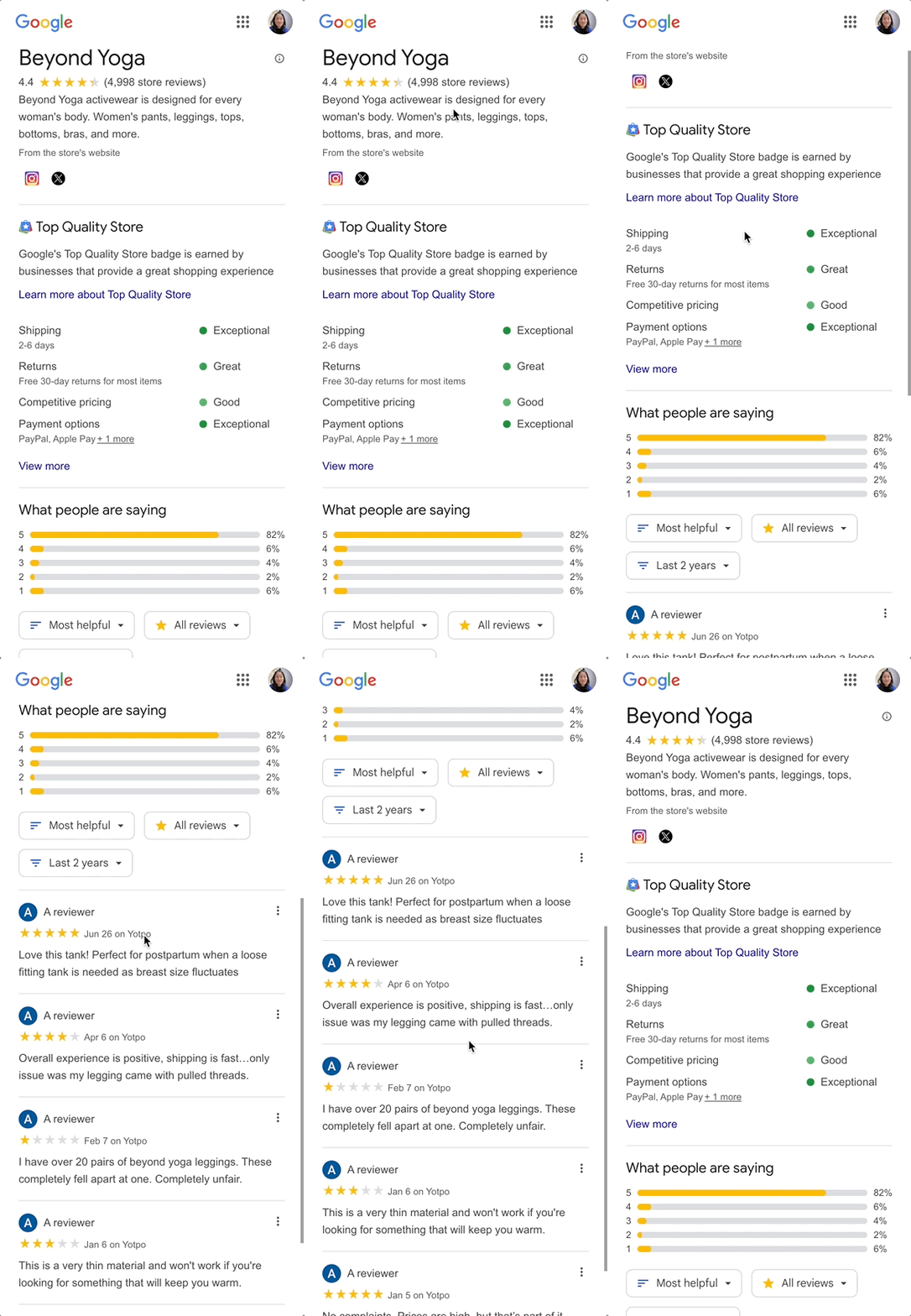
What is Store Pages?
Centralize and organize place of what Google knows about a merchant to help shoppers to have more streamlined decision-making process.

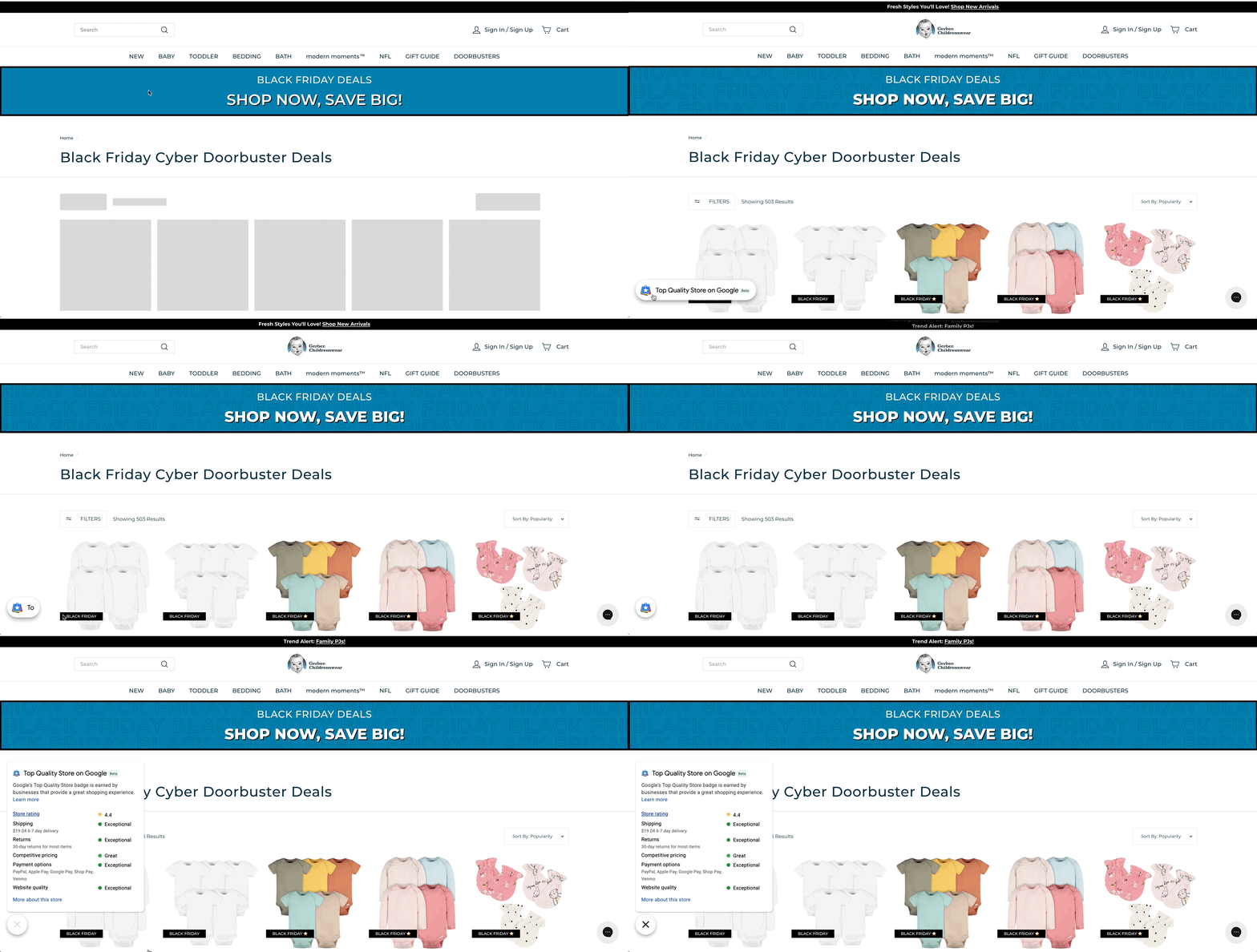
What is Store Widget?
Adaptable overlay page used for content syndication. It offers smaller, more digestible "bites" and "snacks" of merchant information, tailored to specific user needs and contexts.
KEY DIRECTIONS & STRATEGY
1. Scale entry point
Enhancing product discoverability by expanding entry point coverage
2. Build trust through right contents
Adding comprehensive brand contents, merchant's quality signals and shopper’s reviews
3. Syndicate contents across shopping touchpoint
Provide contextual insights where shoppers are


1. Scale entry points

Scale across different Google surfaces and countries by adding the current entry points, ‘Store rating’ and ‘Top Quality Store’ badge.
Top Quality badge
-
Supported regions increased from 4 to 7 (US, CA, AU, NZ, GB, IN & JP)
-
Unlocked new surfaces: Brand Profile and Search
Store Rating
-
Unlocked new surfaces / regions: Search, Shopping results module in C5 (CA, AU, GB, IN, JP), Brand Profile
%201.png)
2. Canonical view
User Research & Content strategy
To understand what contents has more priorities when shoppers are validating and consideration unfamiliar merchants and how shoppers understand each content that we were planning to add into Store Pages.

Adding brand contents & other shopper's experiences
Shoppers want clear signals they can trust quickly. Help shoppers to learn about an unfamiliar brand through 1) Brand contents and 2) Other shopper’s experiences to help them to make informed decisions.
Also, because Store Pages needed to scale across thousands of merchants, the design focused on flexible data structures that could support different merchant attributes while maintaining a consistent user experience
Brand contents

Other shopper's experiences

3. Broad syndication
Designing for the Shopping Ecosystem - Syndicate contents across shopping touchpoints with Store Pages design framework to meet shoppers where they are.
✧ Store widgets in merchant website
-
Fully launched in the US and India
-
The rest of C4
✧ About the source on Search
-
Fully launched in the US and India

Before vs. After

IMPACT

The Store Pages UX Framework
: Architecting Clarity & Trust
Store Pages needed to function as a central identity layer across the Google Shopping ecosystem so I created the UX framework.

Two main use cases for UX framework.
1) Teams that has merchant signals and attributes wants to add their contents into Store Pages
2) Teams that wants to take some contents from Store Pages into their surfaces


A cross-functional design system built to streamline development and inspire shopper confidence at every touchpoint
Store Pages UX framework, a scalable design system solves core commerce challenges. By establishing a "Bite, Snack, Meal" content model, I created a unified set of guidelines that ensures a consistent, intuitive experience across partner teams like Search and GPay, streamlining their work.
The framework is user-centered, designed to build shopper trust by providing clear, digestible information that empowers confident purchasing decisions. The initiative's success is tied to key business metrics and a process for continuous, data-driven improvement, ensuring the framework evolves and consistently delivers value.
LEARNINGS
This project was a pivotal experience in designing systems at scale.
A store page only becomes valuable when it contains meaningful information, but users won’t engage with it unless it appears naturally within their existing shopping journey. . The solution required designing both a comprehensive destination and lightweight entry points that integrate seamlessly across the shopping experience.
Introducing Smart Viewer as an in-context feature increased GIGMV by 8.8%, demonstrating that meeting users in their decision moment, rather than redirecting them elsewhere can improve both user experience and business outcomes.